How the Production Designer of “Train Dreams” Constructed a Cabin That Served as a Memory Anchor

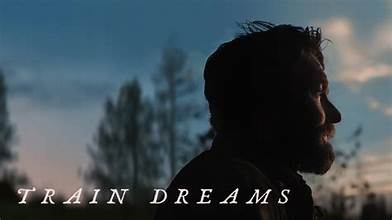
In Clint Bentley’s “Train Dreams,” Joel Edgerton plays Robert Grainier, a modest frontiersman who lived in the Pacific Northwest in the early 20th century. The video examines how industrialization changed the natural world and its inhabitants in a lyrical, impressionistic, yet realistic manner.
Production designer Alexandra Schaller stated, “We didn’t want that museum diorama feeling, even though it’s a period movie.” “Everything felt incredibly real and tactile.”
Creating the modest cottage where Robert establishes a life with his wife, Gladys (Felicity Jones), and infant daughter, Katie, was one of her most significant assignments. The cabin becomes even more significant when he encounters misfortune; according to Schaller, it becomes “the anchor for his memories.” (Warning: spoilers!) Deadline has long recognized the filmmaking team as industry disruptors, and they were nominated for an Oscar in 2025 for Best Adapted Screenplay for their Kwedar-directed picture Sing Sing.
With their second film, Jockey, which developed into Sing Sing, Bentley and Kwedar pioneered Ethos, their equal-pay and equal-equity initiative. Their ongoing decisions to pursue what Kwedar refers to as “community-driven filmmaking,” with subjects that defy today’s box office-driven pressures, have earned them the title of Deadline’s Disruptors in Film. Bentley and Kwedar disclosed that they had recently gotten a call from Steven Spielberg to congratulate them on Train Dreams during the Sun Valley Film Festival Coffee Chat event after the award presentation. Schaller wanted Robert and Gladys’ house to be a useful place to live, but movie sets are frequently modular buildings with movable walls. Thus, with cinematographer Adolpho Veloso’s camera motions in mind, the team constructed a comfortable 36-by-27-foot cabin in a forest close to Spokane, Washington, using mostly native Douglas fir trees. For example, she created a large opening to frame Edgerton and Jones in the middle of the walls between the kitchen and bedroom sections. Schaller intentionally positioned windows because Veloso relied heavily on natural light. Set decorator Melisa Jusufi “excavated Washington State for period-appropriate items” to fill the space with lanterns and candles during night shots. Bentley says of receiving that call, “It is crazy.” “From the beginning, we wanted to try and just make movies that we liked at their core and that we wanted to share with people; whatever came from that, whether it was good or bad, was the icing on the cake.” Lastly, Schaller worked with costume designer Malgosia Turzanska to incorporate hints of Gladys’ hallmark color, yellow, around the room. This is evident in the concept drawings for the delicate drapes and bed linens. The family house was “brimming with potential,” she observed, and the atmosphere was generally friendly and upbeat. The team had to convert the Grainiers’ joyful family home into the basic accommodations Robert constructs on the same piece of property in the hopes that his wife and child will return before they could focus on pyrotechnics.
We spent a lot of time discussing what the new cabin should look like. How does he reconstruct it? Schaller remarked. We’re living so much in his memories, I thought. If we built it in the style of the previous one, but without the bedroom so that there is no escape from the tragedy—he is living it—wouldn’t that be both beautiful and tragic?
However, when Robert returns after a few weeks away to work on the railroad, his house is completely destroyed by fire, and Gladys and Katie are nowhere to be seen. Additionally, Schaller’s team’s cabin actually burned down. She and Bentley concluded that nothing less than actual flames would do after being moved by the viscerality of the burning cabin sequence in Andrei Tarkovsky’s “Mirror.”
However, Kwedar also pointed out that it’s crucial to always find meaning in the work, outside of what may come after the film is released, despite all of their accolades for Train Dreams, including Monday’s Golden Globe nominations for Joel Edgerton in Best Actor – Drama and Nick Cave and Bryce Dessner in Best Original Song, as well as Cinematographer Adolpho Veloso’s LA Film Critics Award win and the movie’s recent five Critics Choice Award nominations. When questioned about their choice to adapt Denis Johnson’s highly internal novella Train Dreams, which rejects any type of blockbuster clichés or a conventional hero-led narrative, “For better or worse, we haven’t figured out the blockbuster film thing yet,” laughed Bentley. “But knowing that, that’s the thing, I think, with all these films, they come from a place of just wanting to tell the story or go into a world,” he continued. And in terms of the first motivator that put us on that course, each movie has been a little different. The two had bonded over their shared love of documentaries when they first met right out of college. Bentley stated, “I believe that during that period, something came to shape our process, which we still use today.” “You’re chatting with the subject who will be on camera while everyone is setting up the cameras, and they’re telling you all these crazy stories and showing you things on their phone, and you’re like, wow, this is incredible.” We are producing this documentary for this reason. “Oh, I can’t talk about that,” they say as they sit down [on camera]. When they sold Jockey for seven figures at Sundance, they demonstrated their equal-pay, equal-equity philosophy. “The cast and crew, as well as the investors, made a huge profit,” Kwedar stated. We returned more than the film’s budget to the artists who created it. That was completed with the crew of ten. And with post-production, that grows even more. However, we were hearing all these tales of individuals returning to complete their degrees with this extra money that wasn’t related to the survival gig attitude. It increases creativity and story possibilities. For example, a person received a check that was precisely the amount they needed to complete an incomplete bathroom remodel that had been sitting for six months.
With their second film, Jockey, which explored the realities of the horse racing industry and was motivated by Bentley’s close exposure to it because his father was a jockey, they continued their approach of incorporating authentic testimony into narrative storytelling.